








Cylindrical Grinding Compilation: 5 Industry-Specific Application Videos
STUDER cylindrical grinding machines excel in producing some of the most demanding (and in-demand) parts in the industry. The brand maintains an ironclad reputation for speed, accuracy and longevity, and it carries this reputation into any industry it touches.
But we won’t just tell you about it. Today, we’ll show it.
We have five real-world application videos to cover, and we’ll get into the challenges each part presents. When you’re done scrolling this page, you’ll have an even better feel for the versatility and reliability you get from STUDER cylindrical grinders.
Let’s get into it.
1st Cylindrical Grinding Application Video: Frack Seat
What is it and what does it do?
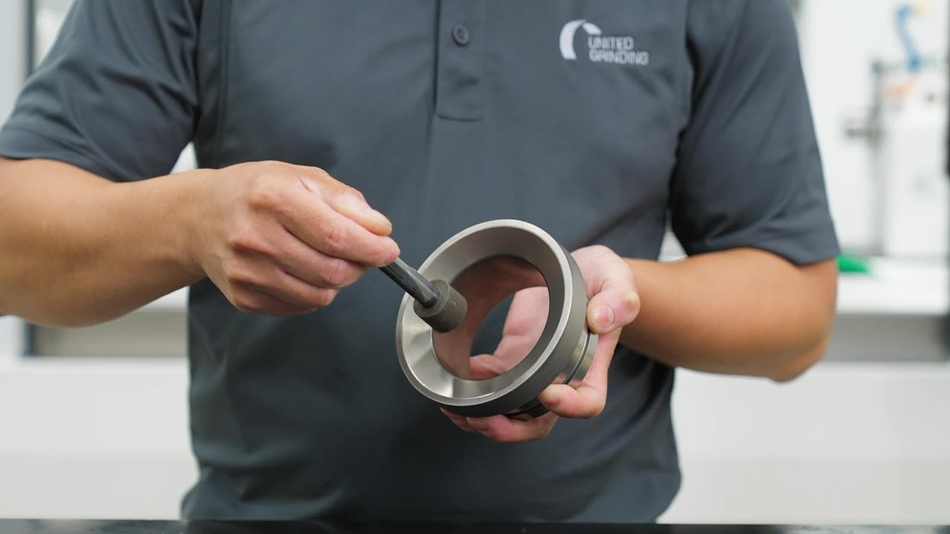
A frack seat is a vital part for the oil and gas industry, found in a hydraulic fracturing pump. A well-made frack seat guarantees a proper sealing surface for the application. This, of course, requires the kind of surface finishes that a STUDER cylindrical grinding machine can provide.
What are the challenges?
On top of surface finish, geometry and concentricity are the big ones. This workpiece sports an ID radius bend, which STUDER ID radius grinding machines handle with ease. And if the OD and ID dimensions line up, you get a proper fit in the housing (critical here because of the extreme pressures this workpiece faces).
What STUDER features let them handle this application easily?
- Vibration dampening thanks to the Granitan® base
- Radius machines are equipped with linear motors, superior for ID grinding
- B5 axis rotation uses the entire wheel periphery for a smoother process
- STUDER SIM software helps to avoid crashes
- A single part clamping ensures the highest accuracy and repeatability
What are the best STUDER cylindrical grinders for frack seats?
Frack seats come in a variety of sizes. STUDER is uniquely positioned to provide solutions here thanks to a wide array of ID radius grinding machine sizes. Check out the STUDER S121, S131, and S141 – all are available with a “radius grinding” configuration.
2nd Cylindrical Grinding Application Video: Turbo Fan
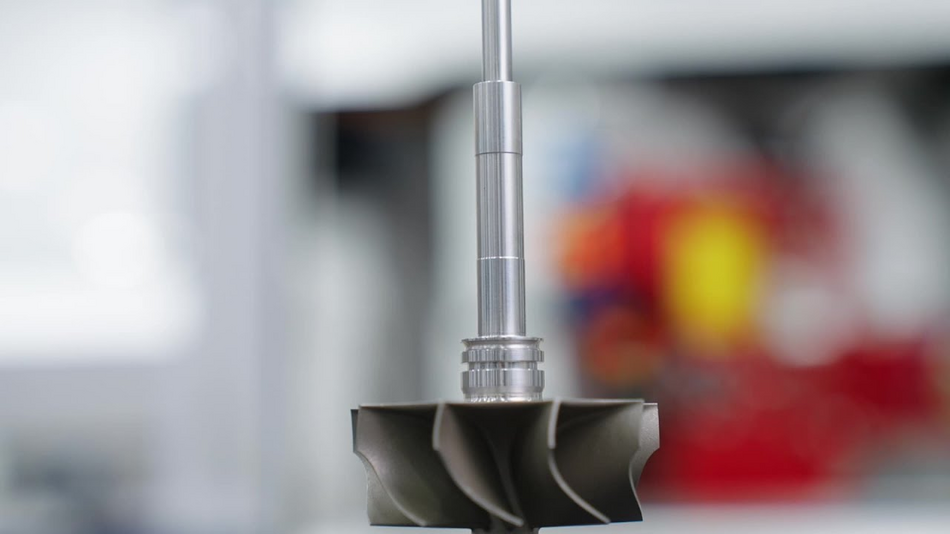
What is it and what does it do?A turbo fan is found in the automotive, transportation and heavy equipment industries. Within the automotive space, you’ll find these made specifically for car and truck engines.Turbos are gaining prominence in the automotive engine world thanks to their fuel efficiency and performance benefits.
What are the challenges?
This part’s bearing journals require extreme tolerances, as small as a few microns. Surface finish must be 6-RA or less, and the parts multiple features require a two-wheel process with specialized dressing for each wheel.
What STUDER features let them handle this application easily?
- Multiple wheelhead configurations grind both features in one clamping
- Some STUDER machines can have a steady rest retrofitted
- Everything done in one setup reduces risk and cycle time while improving part quality
- Pneumatic lift assist on the tail stock and workhead reduces table repositioning time
- Granitan base brings reduced vibration and thermal stability
What are the best STUDER cylindrical grinders for turbo fans?
There are many STUDER models that are capable of grinding turbo fans, including the STUDER S33, S31, S22, S11, and S36. STUDER grinders are highly configurable and many come in a wide range of machine sizes from 400mm between centers to 1,600mm between centers. This is important as turbo fan sizes vary based on the size of the engine in which they’re being used. If you have a turbo fan application and would like personalized, complimentary part consultation, please contact us to get the conversation started!
3rd Cylindrical Grinding Application Video: Hydraulic Control Spool
What is it and what does it do?
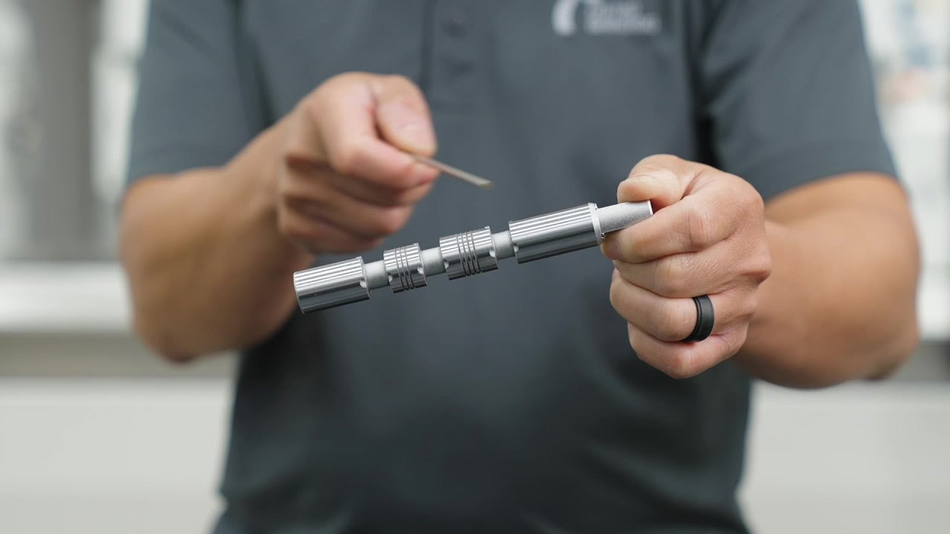
A valve that controls the directional flow of hydraulic fluid. Chances are you’ll find them across pretty much all applications and industries. These parts are everywhere!
What are the challenges?
These spools have very tight tolerances in demanding applications. If it’s a lawn tractor with a loading arm, you’re looking at a few tenths. But if you’re controlling a flight surface on an aircraft, now we’re talking a few microns.
What STUDER features let them handle this application easily?
- World-class repeatability, accuracy and precision are expected when you’re running parts on a STUDER
- Two in-machine OD gauges compare values and provide a cylindricity correction
- An R-axis positions the tactile gauge and measures the land positions pre-and-post flow bench testing. This ensures the correct amount of stock is removed in order to achieve the flows required.
What are the best STUDER cylindrical grinders for hydraulic control spools?
The compact size and R-axis found in the STUDER S11 makes it a great fit for hydraulic control spools. These parts are typically small, and maximizing revenue per square foot is a staple of the S11.
4th Cylindrical Grinding Application Video: Rotary Axial Hydraulic Piston Pump
What is it and what does it do?
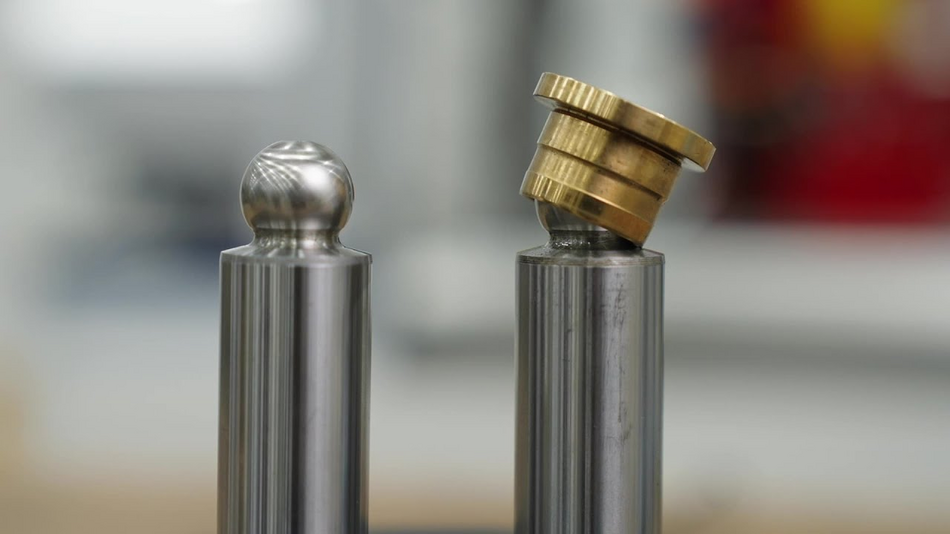
This is another example of a positive displacement pump, but this one is cranked all the way up to 11. These pumps are typically reserved for applications that require continuous operation of high-pressure hydraulic systems, many of which require pressure to reach over 4,500 pound-force per square inch – or higher! You’ll likely find these parts in construction and heavy equipment, industrial machinery, automotive, aerospace and more.
What are the challenges?
Two aspects of this part make it quite the challenge: the OD of the piston shaft and the ball at the top of the shaft. Accuracy, thermal stability, rigidity and precision are all required. And because this is a high-volume component, a system with automation is recommended.
What STUDER features let them handle this application easily?
- STUDER’s automation readiness makes them a natural fit for rotary axial hydraulic piston pump shafts
- For the OD plunge process, STUDER’s synchronous tailstock gives access to the entire part length, allowing it to be ground in a single operation.
- The machine’s Granitan® base reduces vibration and ensures a stable thermal environment, helping to deliver the high-quality surface finishes this part requires.
What are the best STUDER cylindrical grinders for hydraulic control spools?
The STUDER S131r with a cup wheel makes the ball form. The angle at which the plunge occurs with the cup wheel is what is responsible for making the spherical shape.
5th Cylindrical Grinding Application Video: HVOF-Coated Shaft
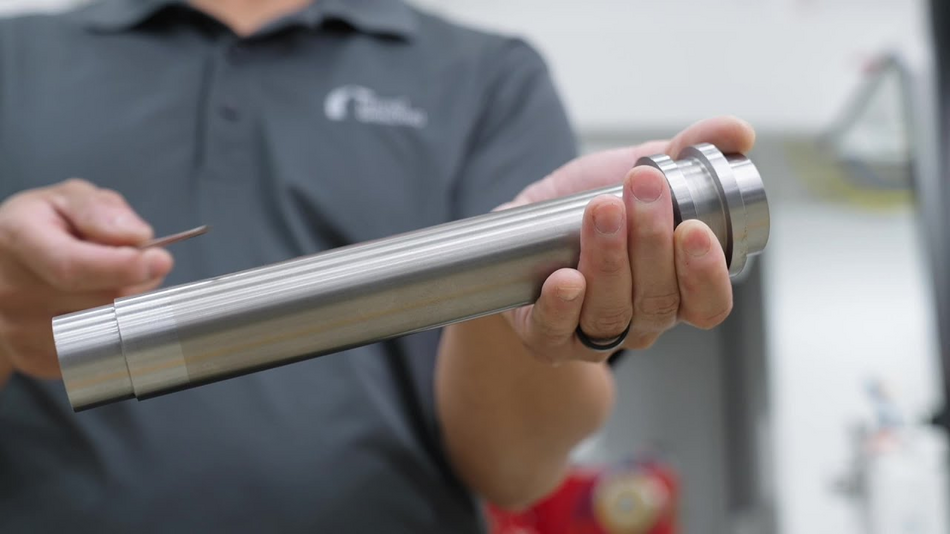
What is it and what does it do?
High-Velocity Oxygen Fuel (HVOF) is a coating that helps parts resist wear in intense environments. It’s a natural replacement for chrome thanks to it being easier to grind and more environmentally friendly.
What are the challenges?
If the material of your HVOF-coated shaft is tungsten carbide, there’s no alternative: you need diamond wheels, rotary dressers and incredibly rigid machinery to meet the stringent finish requirements.
What STUDER features let them handle this application easily?
- Granitan base helps to deliver those immaculate surface finishes.
- Rotary dresser with diamond wheels ensures sharp wheels through high production runs.
What are the best STUDER cylindrical grinders for hydraulic control spools?
There are a number of STUDER machine models that are capable of grinding HVOF-coated parts. It would be best to discuss your particular application with our in-house, US-based applications team to ensure the right machine is selected for your production requirements. If you have a project with an HVOF coating, contact us to get the conversation started today!
STUDER OD/ID Grinders + Applications Support = Success
If the parts you make have specs that are as demanding as your production volume, it might be time for a STUDER cylindrical grinding. There’s an ideal machine for you and your application, and we’ll help you find it. Talk to us today about your cylindrical application.