







3 Hidden Challenges of Micro Tool Grinding
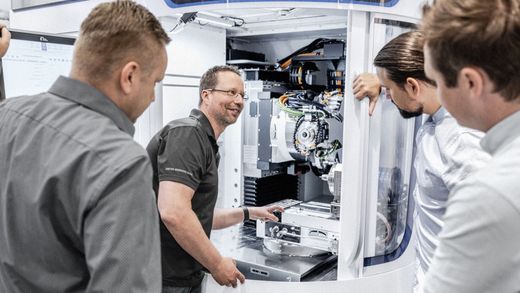
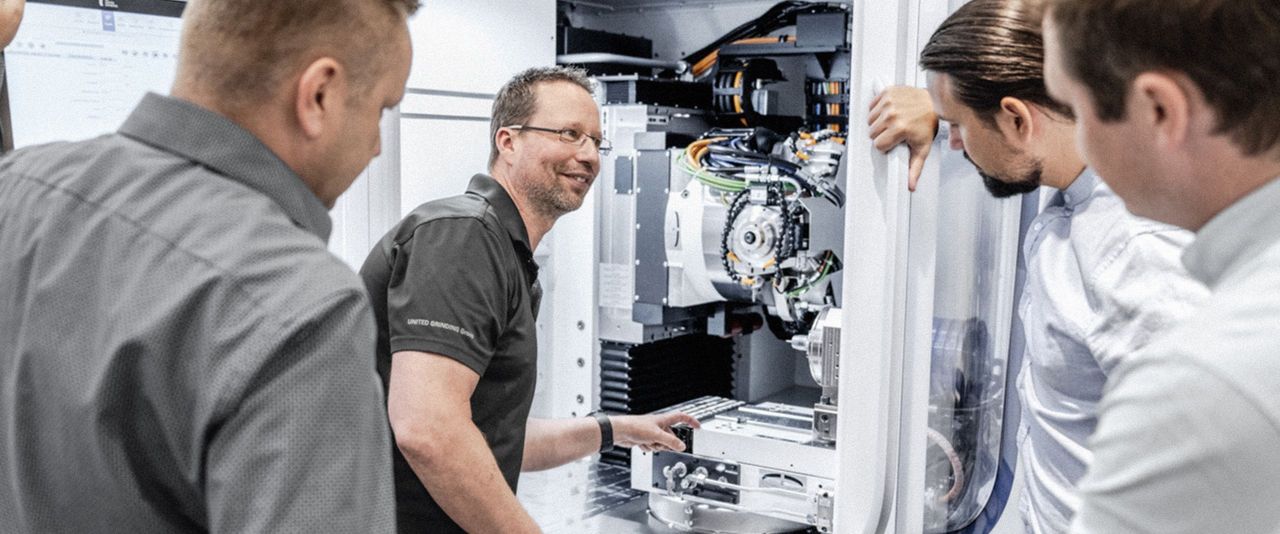
When micro tool production is a necessity, the benefits of micro tool grinding are undeniable. The tight tolerances held by micro tool grinding machines such as UNITED GRINDING North America’s WALTER HELITRONIC MICRO cannot be surpassed. The machine produces high precision micro tools as small as 0.1-mm in diameter with an integrated robot loader, helping tackle higher volume production jobs. The integrated robot loader reduces the frequency in which the machine door needs to open; this in conjunction with the integrated coolant channels in the internal components help maintain a stable thermal environment for micro tool grinding. But with any advanced machining process comes challenges that can be overcome by taking advice from experts in the field.
UNITED GRINDING North America engineers, who solve real-world problems daily, have identified three challenges of micro tool grinding. However, many of these challenges can be resolved with the advanced features of the HELITRONIC MICRO tool grinding machine. The very nature of micro tooling physics, and the processes of measuring micro tools and ensuring consistency can be obstacles to producing a quality tool with efficiency.
Let’s explore these challenges and highlight how WALTER’s tool making and measuring technologies help micro tool manufacturers overcome these challenges every day.
Challenge #1:
Physics of Micro Tool Grinding
The carbide substrate on a micro tool is fundamentally different from the substrates used for standard sized tools. Micro tools typically use a finer grain of carbide substrate, which requires a finer grain in the grinding wheel, which introduces new challenges with the physics of tool grinding.
Due to the smaller grain size of the carbide substrate and the grinding wheel, heat generation becomes more prominent, and therefore becomes a factor that needs to be intentionally managed.
Tool deflection on micro tools requires a different grinding approach compared to grinding more “standard-sized” tools. An effective workholding system and proper grinding wheel balance, truing and dressing can prevent this problem from occurring.
The HELITRONIC MICRO grinder includes options to dampen deflection and reduce vibration, including:
- A high-precision, direct-drive A-axis
- A shank-support steadyrest, and an additional support steadyrest if needed
- In-process dressing/sticking the grinding wheel to ensure a clean wheel, maintaining high quality cuts on long production runs
- An X-axis that places the tool over the center of the C-axis, reducing machine movements during the grinding process. This produces better radius form and finish.
- Inclination option with the B-axis spindle allows for more consistent clearance angle through radius and ball-nose tools
Tips for Micro Tool Grinding:
For forming perfect edges on micro tools with diameters of <1 mm use higher grit wheels such as 1,000 or 1,200 grit. Dressing, truing and balancing the wheel is critically important. Using the right dressing wheel is critically important as well; typically, higher grit grinding wheels require a higher grit dressing wheel as well.
For general operations on tools of >0.5 mm up to 3mm, use a grinding wheel with 600 to 800 grit.
As a general rule, it is recommended to use 1,000 grit for sizes between 0.4 and 0.3 mm, and 1,200 grit for tools around 0.1 mm. Exceptions to this general rule may apply. Check with your wheel supplier if you have specific questions.
Blank prep is a critical part of a successful micro tool grinding process. Ensuring uniform dimensions for all of your blanks will save you from many headaches down the line.
Challenge #2:
Measuring for Accuracy
Measuring micro tools can be a challenge without the right measurement system. For starters, a non-contact measuring method is absolutely necessary because of the tool’s delicate nature. Any contact while measuring can break the tool. Second, very high magnification is required to be able to see the tool, which not all measuring systems are equipped with.
UNITED GRINDING North America’s WALTER HELICHECK NANO CNC measuring machine incorporates both of these characteristics while reducing the influence of the operator. It offers fully automatic measurement of complex geometries in the micro and nano range. With the built-in optical measuring technology, measurements can be recorded on tools from 0.1-mm diameter up to 16-mm in diameter.
The HELICHECK NANO offers rigidity as well as advanced optical measurement technology for the highest possible precision. Specially equipped feet on the machine ensure vibrations from the shop floor do not interfere with measuring processes inside the machine, and its super-high resolution camera provides the utmost accuracy. Microscopes on a turret make different magnifications possible by switching lenses during the measurement process. This is a fully-programmable function within the machine control.
Challenge #3:
Ensuring Part-to-Part Consistency When Microns Matter Most
Producing consistent tools is critical for quality assurance, especially when grinding super small tools. UNITED GRINDING North America does not take this challenge lightly.There are several features in the WALTER HELITRONIC MICRO machine that provide great thermal stability. A three-spindle wheelhead turret and fully integrated robot loader directly inside the machine and a mineral cast base help ensure maximum thermal stability, delivering ideal conditions for manufacturing micro tools. Its software and machine interface makes operating these machines easier and more intuitive, reducing reliance on skilled operators and lowering the learning curve for new operators.
A built-in calibration ball allows the machine a reference point to measure thermal expansion within the machine and auto-update the reference data to mitigate the risk of thermal expansion that can cause tools to go out-of-spec.
To maintain production integrity, the WALTER HELITRONIC MICRO comes equipped with:
- TOOL STUDIO CAD/CAM software and Wizards for easy programming and simulation capabilities that enable operators to zoom in on every aspect of the tool, and magnify it to see every detail
- An integrated robot loader to ensure continuous operation and a thermally stable environment
- Shank supports that can be perfectly dialed in
Did you know?
Grinding micro tools takes more time than macro-level grinding. Parameters differ and require slower grinding speeds for micro tools. For example, for macro grinding, 4 in./min. on a 1-in. tool could be a normal speed. But for a micro tool, it is very common to build the process with much slower feed rates. Other differences in micro tool vs. macro tool grinding include the order in which the tool features are ground. For example, in macro tool grinding, you grind the flute first, but in micro tool grinding, you grind the flute in a later operation because the removal of the material in the flute could compromise the structural integrity of the tool when attempting to grind the end geometry.
Ready to eliminate micro tool grinding challenges?
UNITED GRINDING North America’s Local and Remote Field Service is just a click away. The Customer Care team connects you with a network of qualified service technicians and trained technical advisors to answer your questions.